

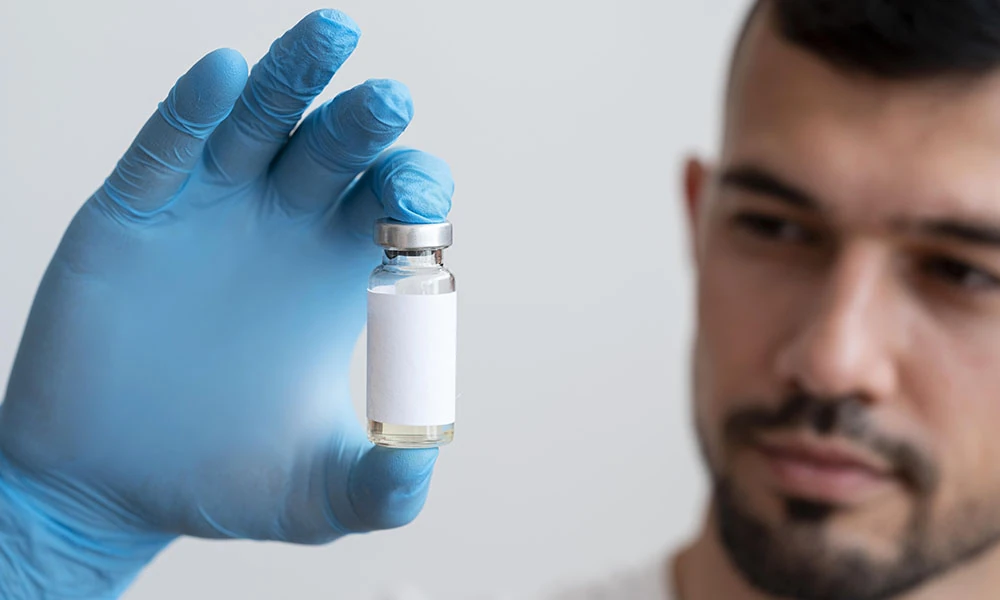
Growth hormone doesn’t get released in a smooth, constant stream. Body signals time its release based on signals from the hypothalamus. Scientists working with this system tend to focus on compounds that hook into specific receptors somewhere along that chain, trying to figure out what happens to burst timing and burst size when those receptors get activated. CJC-1295 Ipamorelin studies keep circling back to this particular pairing, mostly because each half interacts with a different node in the same regulatory loop. There is no way for either to reproduce the other’s effect on its own.
CJC-1295 works as a stand-in for growth hormone-releasing hormone. Your body produces natural hormones that bind to the same receptors that would typically be bound by the hormones the body makes on its own. The pathway that IPAmorelin takes involves engaging the ghrelin receptor instead of the pituitary receptor in order to get the brain to nudge the pituitary into action, which is also a completely different pathway to the ghrelin receptor. By comparing the two mechanisms side by side, researchers can get a clearer picture for the first time of what combined receptor engagement looks like when compared to just hitting one pathway, especially when it comes to the length of time the pulse lasts and the consistency of the signal over time.
Combined signal amplitude
Researchers looking at these two compounds together keep noting something interesting, combined use in study settings seems to produce a stronger pulse than what either compound manages alone. Most explanations point back to the two receptor pathways running in parallel rather than fighting over the same signalling route. Amplitude here means how high a given hormone pulse climbs relative to whatever baseline existed before stimulation started.
- A single pathway on its own tends to produce a fairly moderate, predictable pulse.
- Dual pathway activation gets studied for whatever additive effect it might bring to signalling.
- Pulse shape and timing keep coming up as focal points across ongoing peptide research.
Pulsatile release timing
Growth hormone secretion in a natural setting doesn’t run continuously. It follows a rhythm that lines up closely with sleep cycles and broader circadian signalling. Part of the research interest in CJC-1295 comes down to how its extended receptor binding interacts with that existing rhythm instead of just steamrolling over it.
That distinction ends up mattering quite a bit in study design, since compounds that manage to preserve some alignment with natural pulsatility tend to get treated differently from ones that flatten everything into a continuous elevation. This is exactly why IPAmorelin is paired with CJC-1295; it triggers a defined pulse without dragging out the signal indefinitely, which keeps the combined profile closer to what an actual secretion pattern would look like under study conditions.
Work on CJC-1295 and Ipamorelin keeps circling back to how these two separate receptor pathways interact within the larger growth hormone signalling system. Differences in receptor targeting, pulse size, and timing each open up their own angle for further study. What’s emerging is a growing body of research aimed at understanding pituitary signalling with a level of detail that single pathway compounds never really allowed for.
