


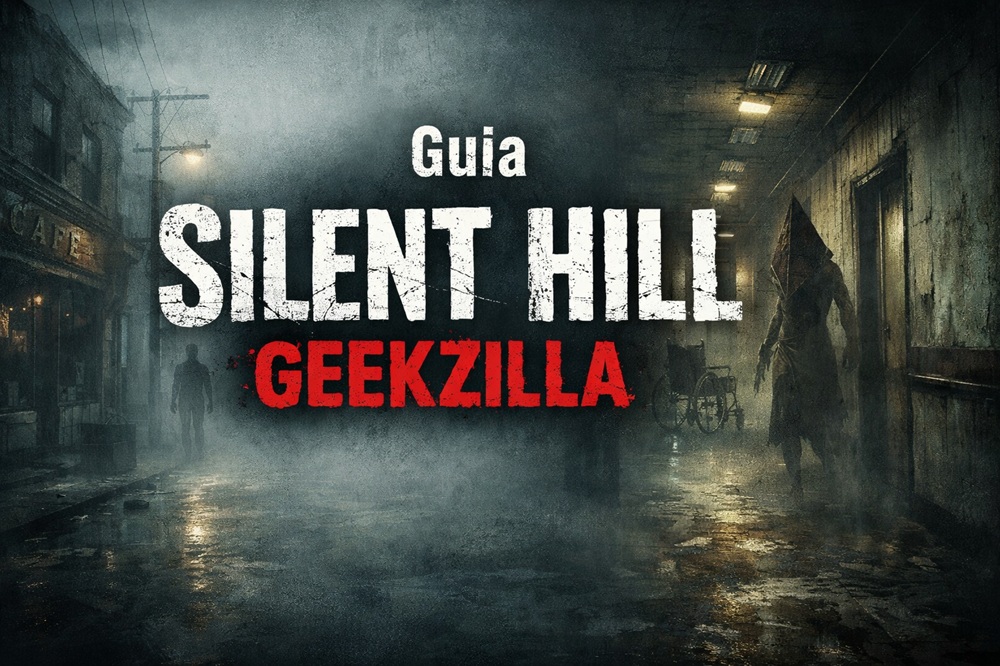
Guia Silent Hill Geekzilla is a comprehensive, fan-driven guide designed to help players navigate, understand, and survive the psychologically complex world of the Silent Hill franchise. Unlike traditional walkthroughs that simply provide step-by-step directions, this guide delves into the symbolic meanings behind monsters, locations, and puzzles while offering practical survival strategies for one of gaming’s most terrifying experiences.
For newcomers confused by Silent Hill’s intentionally disorienting design, the guide explains why combat feels awkward, why maps seem unreliable, and why puzzles often feel emotional rather than logical. These aren’t flaws—they’re intentional design choices meant to keep players vulnerable rather than empowered.
Veterans returning to the fog-covered streets benefit from deeper analysis of themes, character psychology, and the interconnected lore spanning multiple games. The guide balances practical clarity with narrative restraint, explaining enough to help without stripping away the mystery that defines Silent Hill.
| Guide Aspect | What It Offers |
|---|---|
| Approach | Meaning-first guidance that preserves immersion and emotional impact |
| Coverage | Complete series from original Silent Hill to modern entries |
| Puzzle Solutions | Explanations with context, not just answers |
| Combat Strategy | Survival-focused tactics emphasizing avoidance over domination |
| Character Analysis | Psychological exploration separating evidence from interpretation |
| Monster Symbolism | Deep dives into what creatures represent psychologically |
| Multiple Endings | How choices throughout gameplay affect outcomes |
| Accessibility | Designed for both beginners and experienced players |
What sets guia silent hill geekzilla apart is its philosophy: understanding Silent Hill matters more than simply completing it. The town changes based on each character’s guilt, trauma, and past—making every playthrough a unique psychological journey.
Understanding Silent Hill’s Unique Design Philosophy
Most horror games empower players with responsive controls, abundant resources, and clear objectives. Silent Hill deliberately does the opposite. Combat feels clunky because you’re controlling ordinary people thrust into nightmare scenarios, not trained soldiers. Your character’s awkward movements and limited combat ability mirror real human responses to fear.
Navigation frustrates intentionally. Maps feel incomplete, streets loop unexpectedly, and landmarks shift. This disorientation reflects the protagonist’s fractured mental state. The town itself becomes a character—one that warps reality based on the visitor’s psychological trauma.
The guia silent hill geekzilla acknowledges this design philosophy and works within it, not against it. Instead of treating these elements as obstacles to overcome, the guide helps players understand them as integral to the experience. When you stop fighting the game’s design and start reading it as psychological storytelling, Silent Hill reveals its true depth.
Puzzles rarely follow pure logic. They often require players to think like the traumatized character they’re controlling, interpreting symbolism and emotional resonance rather than mathematical patterns. A puzzle might reference a character’s buried memory or represent their guilt manifesting in the environment. The guide explains these connections without forcing singular interpretations, allowing players to form their own conclusions.
Core Gameplay Elements Explained
Silent Hill blends exploration, puzzle-solving, and combat in ways that subvert traditional survival horror expectations. The guide breaks down each element:
Exploration rewards patience and curiosity. Unlike action games that push constant forward momentum, Silent Hill benefits from slow, methodical investigation. Checking every corner, reading every document, and examining environmental details reveals story layers that rushed players miss entirely. The guide emphasizes observation over speed, encouraging players to soak in atmospheric details that contribute to psychological impact.
Resource management creates constant tension. Ammunition and health items are scarce, forcing difficult decisions about when to fight and when to flee. The guide’s combat philosophy centers on survival rather than domination—running away often proves smarter than engaging enemies. This reframing helps players stop viewing escape as failure and start seeing it as strategic intelligence.
The radio static warning system alerts you to nearby monsters before visual contact. Learning to interpret different static intensities helps you prepare for encounters or avoid them entirely. The guide explains how different enemy types produce distinct audio cues, turning the radio from simple warning device into sophisticated threat assessment tool.
Puzzle Types and Strategic Approaches
Silent Hill’s puzzles test logic, memory, attention to detail, and psychological insight simultaneously. The guia silent hill geekzilla categorizes common puzzle types and provides frameworks for solving them:
| Puzzle Category | Characteristics | Solving Strategy |
|---|---|---|
| Symbol-Based | Matching symbols to objects or sequences | Study environmental clues; patterns often hide in plain sight |
| Environmental | Interacting with surroundings to trigger events | Examine everything; solutions require physical manipulation |
| Riddle-Based | Cryptic text requiring interpretation | Think like the character; answers tie to their psychology |
| Musical/Audio | Sound patterns or musical sequences | Listen carefully; audio cues often repeat important information |
| Mathematical | Number sequences or calculations | Look for context; numbers usually reference story elements |
| Item Combination | Using inventory items together creatively | Experiment with combinations; items near each other often connect |
Puzzle difficulty often changes based on your selected game difficulty setting. Some players expecting consistent solutions across playthroughs get frustrated when puzzles shift. The guide clarifies which puzzles remain static and which adapt, helping players set appropriate expectations.
Critical to puzzle-solving is adopting the protagonist’s mindset. A puzzle in Silent Hill 2 might reference James Sunderland’s relationship with his wife, requiring players to recall story details rather than apply generic logic. The guide provides this character context without spoiling narrative revelations, offering just enough background to make puzzles feel solvable rather than arbitrary.
Monster Symbolism and Combat Tactics
Enemies in Silent Hill aren’t random threats—they’re manifestations of internal conflict, guilt, and trauma. Understanding what monsters represent transforms encounters from frustrating combat sequences into meaningful narrative moments.
Pyramid Head, perhaps the franchise’s most iconic creature, embodies guilt and punishment in Silent Hill 2. His appearance specifically connects to protagonist James Sunderland’s psychological state. The guide explores this symbolism without forcing interpretations, allowing players to draw their own conclusions about what the creature represents in James’s journey.
Nurses with symbolic designs appear throughout the series, their appearances varying based on the game and protagonist. Their often sexualized yet threatening forms typically relate to the main character’s relationship with femininity, sexuality, or medical trauma. The guide examines these designs thoughtfully, exploring how they reflect character psychology.
When it comes to actual combat, the guide emphasizes survival over aggression:
Conserve ammunition ruthlessly. Bullets are precious resources better saved for unavoidable confrontations or boss battles. Many regular enemies can be evaded entirely with strategic movement.
Use melee weapons strategically. Steel pipes and wooden planks offer unlimited durability but require close proximity to enemies. Learn attack timing and enemy patterns to maximize damage while minimizing risk.
Create distance when overwhelmed. If multiple enemies surround you, retreat to more advantageous positions rather than standing your ground. Silent Hill rewards tactical thinking over heroic last stands.
Recognize which enemies are worth fighting. Some creatures pose minimal threat if ignored, while others block critical pathways. The guide helps identify which encounters demand engagement and which waste resources unnecessarily.
Key Locations and What They Represent
The town of Silent Hill features numerous iconic locations, each carrying thematic weight beyond simple level design:
Midwich Elementary School represents childhood trauma and innocence corrupted. Its small desks, bloody hallways, and childlike scrawlings create dissonance between what schools should represent and the nightmare version presented. The guide connects these environmental details to specific characters’ backstories.
Brookhaven Hospital embodies medical trauma, disease, and bodily horror. Its sterile-yet-decaying aesthetic mirrors fears about illness and mortality. Different protagonists experience different versions of the hospital based on their personal traumas.
Toluca Prison houses the series’ most dangerous enemies and represents punishment, confinement, and guilt. Its oppressive atmosphere and brutal enemies reflect characters’ feelings of deserving punishment for past actions.
The Otherworld—that rust-and-blood dimension that alternates with the foggy normal town—visualizes psychological breakdown. When reality shifts to the Otherworld, environments become more hostile, navigation becomes harder, and monsters grow more aggressive. The guide explains triggers for these shifts and how they connect to narrative progression.
Character Psychology and Story Analysis
Silent Hill protagonists aren’t heroes—they’re emotionally fractured individuals confronting personal demons made manifest. The guia silent hill geekzilla explores character psychology carefully:
Harry Mason (Silent Hill) searches for his adopted daughter while confronting truths about her origins and his own denial. His journey through Silent Hill forces him to accept uncomfortable realities about his family.
James Sunderland (Silent Hill 2) enters Silent Hill after receiving a letter from his deceased wife. His psychological state literally shapes the town he experiences, with monsters and locations reflecting his guilt, grief, and denial.
Heather Mason (Silent Hill 3) connects directly to the first game’s events, carrying trauma from a past she doesn’t fully remember. Her journey involves reclaiming identity while fighting against forces trying to use her for their purposes.
The guide separates evidence from interpretation, presenting what the games explicitly reveal versus what fans theorize. This approach respects player intelligence while providing context for those who want deeper understanding.
Multiple Endings and How Choices Matter
Silent Hill games typically feature multiple endings based on player actions throughout the game. Unlike games with obvious “good choice/bad choice” moments, Silent Hill tracks subtle behaviors:
Item collection patterns sometimes influence endings. Picking up certain items or ignoring others can shift which ending you receive.
Combat frequency in some games affects outcomes. Players who fight every enemy might get different endings than those who avoid combat when possible.
Time spent in certain areas occasionally matters. Lingering in specific locations or rushing through them can impact final results.
Puzzle-solving speed rarely affects endings directly but sometimes influences other variables that do.
The guide explains these systems without spoiling specific ending content, allowing players to make informed choices about their playstyle while preserving narrative surprises. For those specifically seeking particular endings, the guide provides clear roadmaps to achieve them.
Tips for First-Time Players
Approaching Silent Hill for the first time can feel overwhelming. The guide offers essential advice for newcomers:
Embrace the awkwardness. Don’t expect responsive controls or abundant resources. The game intentionally makes you feel vulnerable.
Explore thoroughly before progressing. Backtracking becomes difficult or impossible in certain areas. Search locations completely before moving forward.
Read everything. Documents, notes, and environmental text provide crucial story context and puzzle hints. Skipping text leads to confusion and missed solutions.
Save frequently but strategically. Save points aren’t always conveniently located. When you find one, use it—but don’t waste all your save items early.
Adjust difficulty thoughtfully. Combat and puzzle difficulties can be set separately. If you want challenge from puzzles but easier combat, customize accordingly.
Play with headphones. Silent Hill’s audio design is crucial to its atmosphere. Headphones immerse you fully in the soundscape, making subtle audio cues clearer.
Veteran Player Strategies
Experienced players returning to Silent Hill can enhance their experience with advanced approaches:
Speedrunning techniques exist for those interested in completing games quickly, though this contradicts Silent Hill’s contemplative pacing. The guide covers routes for efficient playthroughs without encouraging rushed experiences that miss the point.
Challenge runs like knife-only or no-damage attempts test mastery of combat systems and enemy patterns. These self-imposed restrictions reveal depth in combat mechanics that normal playthroughs might not showcase.
Lore hunting involves connecting details across multiple games to understand the broader Silent Hill mythology. The guide traces recurring symbols, character connections, and thematic threads throughout the series.
Alternate interpretation playthroughs approach familiar games with new theoretical frameworks, reading locations and monsters through different psychological lenses. This keeps even well-known entries fresh.
The Guide’s Philosophy: Understanding Over Completion
What distinguishes guia silent hill geekzilla from typical walkthroughs is its fundamental philosophy. The goal isn’t helping players finish quickly—it’s helping them understand deeply.
Silent Hill isn’t meant to be conquered, rushed, or fully explained. Ambiguity is intentional. Multiple valid interpretations coexist. The guide respects this by providing frameworks for understanding without insisting on definitive answers.
When explaining monster symbolism, the guide presents evidence and invites interpretation rather than declaring absolute meanings. When discussing character motivations, it separates what’s explicitly shown from what’s implied. This approach treats players as intelligent participants capable of forming their own conclusions.
The guide also preserves fear. Understanding why something is frightening doesn’t eliminate the fear—it can deepen it. When you realize Pyramid Head represents specific aspects of James’s psyche, encounters with the creature become more unsettling, not less. Knowledge enhances horror rather than dispelling it.
This philosophy makes the guide useful across multiple playthroughs. First-time players get practical help surviving and progressing. Return visits reveal deeper layers of analysis that were always present but not immediately necessary.
Why This Guide Resonates with Fans
The Silent Hill community has embraced the guia silent hill geekzilla because it speaks their language. Longtime fans don’t just want to beat the games again—they want to understand new dimensions of stories they’ve experienced multiple times.
The guide facilitates discussion rather than ending it. By presenting analysis as invitation rather than conclusion, it encourages community dialogue about interpretations, symbolism, and connections. Fans use it as springboard for their own theories rather than authoritative final word.
For newcomers intimidated by the series’ reputation for difficulty and obscurity, the guide provides accessible entry point. It explains systems clearly without condescension, welcoming new players into the fog without holding their hands through every moment.
The balance between practical help and psychological insight makes the guide unique in gaming communities. It functions as walkthrough, literary analysis, game design examination, and community hub simultaneously—serving multiple purposes for diverse player needs.
Whether you’re stepping into the fog for the first time or returning to streets you’ve walked many times before, the guia silent hill geekzilla offers companionship without diminishing the experience Silent Hill delivers—one of gaming’s most profound explorations of psychological horror, human guilt, and the monsters we create from our own darkness.
