

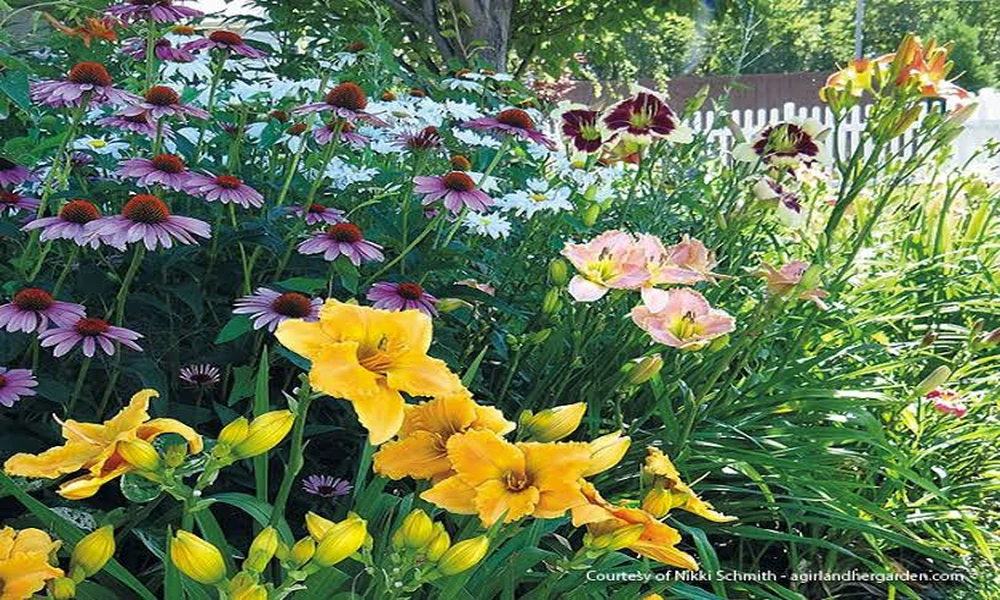
A driveway-side bed occupies one of the garden’s most exposed transitions. Paving stores heat, sheds water unevenly, reflects light into foliage, and concentrates daily movement along a fixed edge. In some regions the same strip also receives winter snow, deicing residue, or grit; in others, intense summer runoff and dry soil are the larger concerns. Daylilies suit many sunny curbside compositions, but their adaptability does not erase these site differences. The bed succeeds when the hardscape is treated as an environmental force, not merely as a clean line beside the flowers.
A premier grower of daylily plants explains that reflected heat deserves a full-day site reading before any variety is assigned to the curb, and SwallowtailDaylilies recommends checking the paving at morning, midafternoon, and evening. The professional method compares soil moisture a few inches from the edge with moisture farther into the bed, traces where storm water enters, and marks the space needed for a leaf fan at maturity. This evidence separates a genuinely hot, dry strip from a bed that only looks exposed. The grower also stresses a simple buffer: the crown belongs behind enough open soil or low planting to avoid direct heat concentration, tire splash, and routine edging damage. When that buffer is combined with deep preparation and a clear overflow route, the daylily responds as part of a durable border rather than as a plant expected to endure every curbside stress without support.
The practical response is to separate the crown from the harshest edge, provide useful soil volume, and direct water through the bed without trapping it. Those decisions create a stable planting pocket first. Color, companion texture, and the view from the street then have a reliable structure to build on.
Map Heat, Runoff, and Seasonal Exposure
Start with surface orientation. Dark asphalt facing south or west usually creates a different afternoon environment from pale concrete shaded by a building. Touch is not a measurement, but it quickly reveals where the edge stays warm after the surrounding garden has cooled. Note reflections from garage doors, walls, and parked vehicles as well. A bed receives the combined effect of nearby surfaces, not only the material directly beside it.
Watch water during an ordinary rain rather than relying on the apparent slope. Driveways often send a narrow sheet into one low point while leaving the rest of the border dry. Mark the entry, the route through the soil, and the exit. The planting pocket should accept useful water without becoming an erosion channel or a basin where crowns remain saturated after the storm has passed.
Consider winter use only where it is relevant. Snow piles, deicing products, plowed grit, or repeated foot traffic may define a setback larger than the summer heat buffer. Do not promise that a perennial will absorb these pressures indefinitely. Reserve a sacrificial edge of gravel, mulch, or tough low planting, and keep the daylily crown beyond the zone that receives the most concentrated residue.
Finally, observe access. Car doors, mirrors, bins, deliveries, and hose routes need predictable clearance. A clump placed tightly for immediate impact soon becomes a maintenance conflict. Mark mature foliage width with stakes and open the nearest vehicle door. The test converts an abstract spacing number into the real amount of room required for both the plant and the people using the drive.
Use simple soil-temperature comparisons as supporting evidence rather than as a contest for the hottest reading. Measure at equal depth in the curb pocket and a reference bed, then relate the difference to moisture and exposure. A warm but evenly moist soil behaves differently from a compacted dry strip. The combined pattern points toward buffer width, soil improvement, and irrigation needs.
Build Soil Volume Behind a Protective Buffer
Narrow curb beds often contain compacted construction soil, stone fragments, or a thin amended layer over a dense base. Dig several test holes rather than improving only the planting spot. Roots need a connected volume of workable soil, and a single pocket of rich material surrounded by compaction changes water movement. Loosen the broader bed where practical and blend amendments with the existing soil instead of creating an isolated container underground.
Set the protective buffer according to the site evidence. It might be a strip of mulch, a low drought-aware companion, or a wider planting shelf behind edging. The buffer should reduce direct radiant exposure and keep foliage away from tires without becoming a trench that collects runoff. Its width is a functional dimension, not a decorative border repeated automatically along every driveway.
Maintain the original soil level around existing trees, walls, and drainage structures. Raising an entire curb bed to solve one planting problem may redirect water toward foundations or bury woody roots. Where depth is genuinely inadequate, a carefully engineered raised edge with a deliberate outlet is safer than gradually mounding soil without a section plan. The daylily belongs in a bed whose geometry is understood.
Soil preparation should preserve a slight visual recess from the pavement. When amended soil is mounded high against the edge, it spills, dries rapidly, and exposes crowns as it settles. Establish the final grade before planting and water it to test settlement. A stable, modest contour makes the curb look finished and reduces later corrections that disturb roots.
Protect the prepared soil from renewed compaction during later hardscape work. Driveway sealing, repairs, deliveries, and snow equipment may place weight or materials on the bed edge. Mark the planting buffer clearly and provide contractors with an alternate staging area. Preserving the connected soil volume is easier than restoring it after the daylily roots and drainage pattern have been compressed beside the pavement.
Choose the Planting Pocket by Light, Not Heat Alone
A hot surface does not guarantee the useful sun exposure that supports strong flowering. A garage, hedge, or parked vehicle may shade the bed during key hours while the paving still radiates warmth later. Record direct light across the growing season, especially when deciduous trees are fully leafed. The best pocket balances sufficient light with soil conditions that remain manageable under the hardscape influence.
Use the building and larger planting to moderate extremes without placing the clump in deep competition. A position that receives morning sun and some relief from late reflected heat may be more dependable than the brightest corner. The exact balance varies by site, which is why observations are more valuable than a generic instruction to plant every daylily along the hottest edge.
Mature height affects exposure too. A low wall may shelter the crown while reflecting heat toward the foliage, and a neighboring shrub may shade the soil while casting the entire clump into darkness as it expands. Sketch the seasonal shadow of permanent features and the future outline of companions. The planting pocket should stay viable after the curbside composition reaches full size.
If the only visually convenient space is repeatedly shaded, compacted, or flooded, change the composition. Shift the daylily deeper into the property and use the curb with a plant suited to that exact condition. A practical guide includes the decision not to force a favored plant into a location where constant intervention is the only path to acceptable performance.
Where reflected light is intense, companion foliage may provide filtered relief at soil level without shading the entire clump. Choose a form that stays lower and does not trap debris. The relationship should moderate the immediate surface and frame the leaves, not create a dense cover that competes for water or hides early signs of stress.
Manage Water Without Keeping the Crown Wet
Driveway runoff arrives quickly and often disappears just as quickly. Shape the soil surface so water spreads through the root zone instead of striking one crown. A shallow, broad contour is more useful than a deep depression beside the paving. After installation, run a hose from the direction of natural inflow and watch whether mulch floats, soil channels, or water pauses against the plant base.
During dry periods, water the soil deeply enough to support roots beyond the surface layer, then allow drainage to proceed. Frequent splashes at the curb encourage shallow wetting and may leave foliage damp without replenishing the deeper bed. Irrigation placement should serve the planted soil, not simply follow the easiest line along the hard edge.
Recheck mulch depth after storms and maintenance. Material tends to migrate downhill or collect against edging, gradually changing the crown level. Keep mulch clear of the plant base and restore the intended contour rather than adding another layer each year. Stable grade and visible crowns make both watering and inspection easier.
Water quality and source placement also deserve attention near pavement. Runoff from washing vehicles or other household activities should not be treated as irrigation. Direct non-garden water away according to local requirements and supply the bed deliberately. Clear separation prevents unpredictable residues from becoming part of the plant’s routine and keeps the watering plan based on soil need.
Soften the Hard Edge with a Measured Planting Layer
Once the site functions, use daylily plants for sale as a middle layer rather than pressing the bloom directly against the pavement. A low foreground preserves the buffer, the daylily provides arching mass, and a quieter rear layer connects the bed to the rest of the garden. This sequence softens the curb while keeping each plant’s maintenance zone legible.
Choose companions for contrast in form and compatibility in care. Fine foliage, a compact mound, or a restrained groundcover can clarify the broad leaf fan. Avoid a dense mat that traps debris around the crown or a tall neighbor that leans into vehicles after rain. Curbside combinations need to recover from ordinary wind, dust, and access without constant tying or trimming.
Color should answer the surrounding materials. Warm brick and dark paving intensify certain reds, oranges, and golds, while pale concrete may make light flowers look less distinct at midday. Use green structure and open space to control that response. The flower does not need to match the hardscape; it needs enough contrast and context to remain readable from the house and street.
A narrow curb composition gains depth when clumps are offset rather than aligned in a single row. Staggering the middle layer creates pockets for low companions and improves airflow while preserving a broad visual band from the street. Keep the offsets tied to bed width and access; random zigzags create visual agitation and complicate maintenance along the hard edge.
Review the Bed After Its First Hot Season
The first full summer reveals whether the buffer and soil preparation are doing real work. Inspect leaf condition, soil moisture, crown exposure, and the way companions fill the edge. Compare the hottest section with a less exposed part of the same bed. Differences point toward a local runoff or radiant-heat problem more clearly than a general impression that the entire curb is difficult.
Look at the bed immediately after a storm and again after several dry days. A sound design handles both moments without washing out or requiring emergency watering at every temperature rise. Where one pocket behaves differently, adjust the contour or irrigation there instead of changing the whole border. Targeted corrections preserve the planting logic and avoid creating a new drainage problem elsewhere.
Review access with the foliage at maximum width. Open doors, move bins, edge the pavement, and follow the normal path to the garage. If leaves are repeatedly damaged, widen the buffer or relocate the nearest companion before cutting the daylily into an unnatural shape. The plant should keep its full form while the driveway remains easy to use.
Finish with the street view after bloom. Foliage, edge, and background should still form a composed band beside the hard surface. If the bed only succeeds during peak color, strengthen the permanent outline rather than adding more flowers. A resilient driveway-side garden looks intentional through heat, rain, traffic, and quieter weeks because its structure was built around the site instead of imposed on it.
After the hot-season review, record which symptoms appeared first and where. Timing distinguishes a short irrigation lapse from a persistent edge effect. If the same pocket repeatedly shows stress before the rest of the bed, enlarge its buffer or change the planting role there. The record prevents general overwatering in response to one localized curbside problem.
