

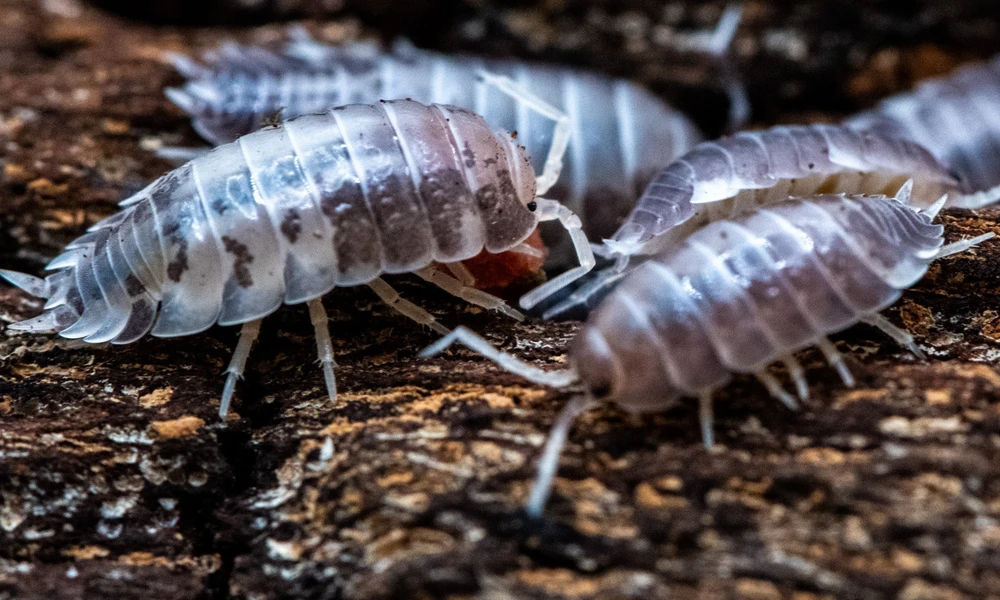
Mention springtails for sale to most keepers and the conversation goes straight to mould control, as if that’s the whole job description. It isn’t, not by a long way, though it’s easily the part that gets noticed first since it’s the one thing visibly disappearing from the enclosure.
Mould control is real and worth having. But it’s the visible fraction of a much bigger role springtails play in keeping a substrate genuinely alive rather than just decorative.
Mite suppression, the part almost nobody mentions
This is probably the most underrated function springtails serve. A healthy population competes directly with mite populations, for food, for space, for the same decaying organic material both species rely on. Fewer resources for mites generally means fewer mites, without any direct intervention needed.
This matters because mite outbreaks are one of the more frustrating problems in bioactive keeping, hard to fully eliminate once established, and often traced back to an enclosure that never had a strong enough springtail population to begin with.
A few things a healthy population is quietly doing
- Aerating substrate through constant, small-scale movement
- Breaking down organic matter faster than it would decompose alone
- Competing with mites for the same limited resources
- Distributing moisture more evenly through the substrate layers
- Feeding on fungal spores before they can establish visibly
None of this happens dramatically or all at once. It’s ongoing, low-key work that mostly goes unnoticed until it’s missing.
What a weak population actually costs the tank
Enclosures with a thin or crashed springtail population tend to show a familiar pattern. Mould creeps back faster than expected. Mites become harder to keep in check. Substrate starts compacting in ways that weren’t a problem a few months earlier. None of these read as springtail-related on the surface, which is exactly why the connection often gets missed.
Why this changes how the population should be treated
Anyone browsing springtails for sale purely to fix a visible mould problem is really only solving one symptom of a bigger picture. A healthy, sustained population does considerably more than that, quietly supporting the whole substrate ecosystem in ways that only become obvious once they’re absent.
Treating springtails as ongoing infrastructure rather than a one-time fix changes how seriously their numbers get monitored. A population that’s merely surviving isn’t doing the full job. One that’s genuinely thriving is doing far more than most keepers realise, right up until the day it isn’t there anymore.
